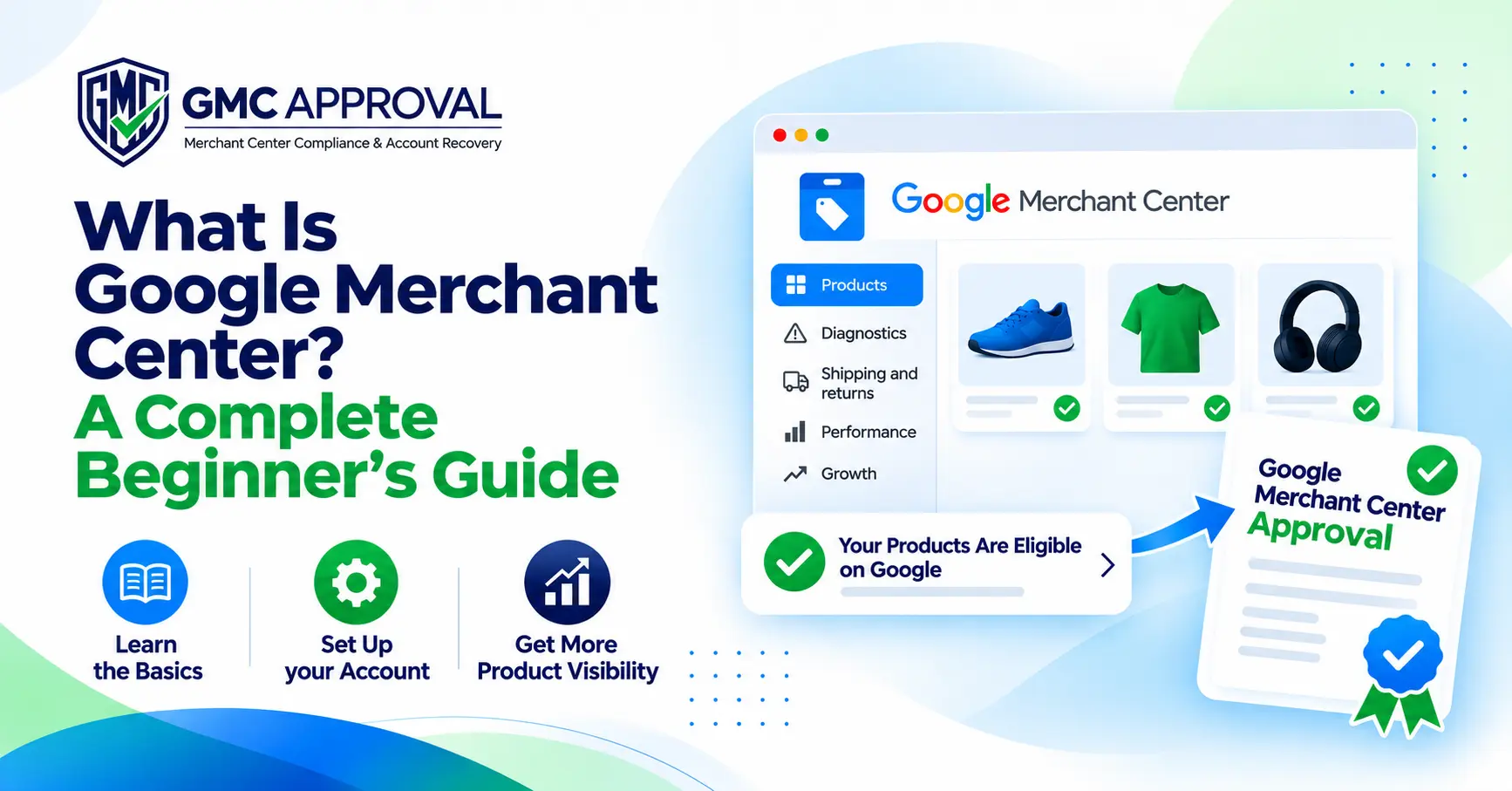
What Is Google Merchant Center? A Complete Guide for Beginners
If you sell products online, getting those products in front of the right shoppers is just as important as having a well-designed store. This is where Google Merchant Center becomes valuable.
Google Merchant Center is a platform that allows businesses to provide Google with detailed information about the products they sell. Product names, prices, images, availability, descriptions, links, shipping information, and other attributes can be submitted and managed through Merchant Center.
Once Google has this information, eligible products can appear across Google surfaces, including Google Shopping and free product listings. For e-commerce businesses, this creates another pathway between a product catalog and potential customers actively searching for something to buy.
Think of Merchant Center as the bridge between an online store and Google's product ecosystem.
It does not replace an e-commerce website. Instead, it helps Google understand what is being sold on that website and how those products should be presented to shoppers.
Why Google Merchant Center Matters for E-commerce
Modern e-commerce is fiercely competitive. A customer searching for a pair of running shoes, a skincare product, or a laptop may encounter dozens or even hundreds of competing products within seconds.
Simply publishing a product on a website does not guarantee that Google will understand it properly or display it prominently.
Google Merchant Center gives retailers a structured mechanism for submitting product information. That information can then be used to make products eligible for different Google shopping experiences.
One of the most significant advantages is product visibility. Instead of relying solely on traditional organic search results, an e-commerce business can potentially expose its products through shopping-related placements and free product listings.
Merchant Center can also support paid advertising through Google Ads. When connected properly, product data can be used for Shoppingshopping campaigns and Performance Max campaigns, allowing advertisers to promote specific products to people who demonstrate relevant commercial intent.
Another advantage is data control.
A well-maintained product feed can communicate important details such as:
Product title
Product description
Price
Availability
Product image
Brand
GTIN
Product category
Product condition
Product landing page
Shipping information
Accurate information matters because discrepancies can create friction. If a product is shown as available on Google but is unavailable on the website, shoppers may lose trust. Likewise, an incorrect price can create a poor customer experience and potentially trigger product issues.
For e-commerce businesses, Merchant Center is therefore more than a product-uploading tool. It is part of the infrastructure that connects product data, Google visibility, advertising, and shopping intent.
How Merchant Center Helps Customers Discover Your Products
Imagine someone searching Google for "black leather handbag."
Instead of seeing only blue links, the shopper may encounter product-focused results containing images, prices, store information, and other shopping details.
That visual presentation can dramatically change how customers interact with search results.
Product discovery becomes more immediate.
A shopper can compare several products before visiting an individual website. They may evaluate the appearance of a product, compare prices, identify available options, and then click through to the retailer offering the item.
This is particularly useful for products with strong visual appeal. Fashion, electronics, home décor, beauty products, sports equipment, and countless other categories can benefit from product-focused discovery.
Free Product Visibility
Google offers eligible merchants opportunities to display products through free listings. This means businesses do not necessarily need to pay for every product impression generated through Google.
Free listings can provide an additional acquisition channel for e-commerce stores.
However, eligibility and visibility depend on factors such as product data quality, relevance, policies, and Google's systems.
Paid Product Advertising
Merchant Center can also work alongside Google Ads.
Businesses can use their product catalog to create advertising campaigns designed to reach potential customers with commercial intent. Rather than showing a generic advertisement, these campaigns can showcase individual products with information such as images, prices, and store details.
The result is a more product-centric advertising experience.
Better Product Understanding
Google needs structured information to understand what a product actually is.
A vague title such as "Premium Choice" provides little useful context.
A more descriptive title containing the product type, brand, model, size, or other relevant attributes gives Google substantially more information to work with.
This is why product feed optimization matters.
The better the underlying information, the clearer the relationship between a shopper's query and the products being offered.
How Google Merchant Center Works
At its core, Google Merchant Center revolves around product data.
A merchant provides Google with information about its products through one or more supported data sources. These may include feeds, spreadsheets, e-commerce platform integrations, or other supported methods.
Google processes this information and checks it against various requirements, policies, and quality signals.
The general workflow looks like this:
Online Store → Product Data → Merchant Center → Google Processing → Product Visibility
The first stage is the online store.
The website contains the actual products and their associated information. Merchant Center then receives structured information about those products.
The next stage is processing.
Google evaluates the submitted information. It may identify missing attributes, conflicting information, policy concerns, or technical problems.
This is where the Diagnostics area becomes particularly useful.
If Google detects an issue, the merchant may receive notifications explaining that certain products have warnings or disapprovals.
For example, a product might have a problem because its price in the feed differs from the price displayed on the landing page.
Another product might lack an important identifier.
A product image could also violate an image-related requirement.
Once problems are corrected, product data can be updated and resubmitted.
Product Feeds Are the Foundation
A product feed is essentially a structured collection of information about products.
Depending on the business and integration method, a feed can contain hundreds or thousands of products.
Each product may include multiple attributes. These attributes provide Google with the contextual framework required to understand and categorize the item.
For a large Shopify store, for example, automated synchronization can be particularly useful because product inventory, pricing, and availability may change frequently.
Accuracy Is Critical
Merchant Center does not exist in isolation from the website.
The information submitted to Google should correspond with what customers actually see when they visit the product page.
Consistency between the feed and website is therefore fundamental.
A feed might say:
Price: $49.99
while the website displays:
Price: $59.99
That discrepancy can create problems.
Maintaining synchronization helps reduce these inconsistencies and creates a more reliable shopping experience.
Google Merchant Center Features You Should Know
Google Merchant Center contains several features designed to help businesses manage product visibility and shopping data.
Product Data Management
Merchant Center provides a centralized environment for managing product information.
Instead of relying on Google to infer every product attribute from a website, merchants can provide structured information directly.
This can make product data more intelligible and manageable.
Free Product Listings
Free listings can allow eligible products to appear across Google's unpaid shopping experiences.
For businesses with limited advertising budgets, this can be especially valuable.
While free listings do not guarantee traffic or sales, they can create additional opportunities for product discovery without requiring an advertising budget for every impression.
Google Shopping Ads Integration
Merchant Center is closely integrated with Google Ads for product advertising.
Advertisers can use product information from Merchant Center to promote individual products and product groups.
This makes Merchant Center an important component of a broader e-commerce advertising architecture.
Diagnostics
Diagnostics is one of the most useful areas for troubleshooting.
It can highlight product-level or account-level problems that may affect visibility.
Issues can include missing information, policy problems, incorrect product data, or other requirements that have not been satisfied.
Regularly reviewing diagnostics can help prevent small issues from becoming widespread catalog problems.
Performance Insights
Merchant Center can also provide information that helps merchants understand product performance and visibility.
Analyzing performance data can reveal which products receive attention, which products may require optimization, and where opportunities exist.
The goal is not merely to upload products.
The goal is to create a healthy, discoverable, and commercially effective product catalog.
Promotions
Eligible merchants may also use Merchant Center to communicate promotions and special offers.
Promotional information can make products more compelling by highlighting discounts, deals, or limited-time incentives where supported.
This can be particularly useful during seasonal campaigns and major retail periods.
What Information Do You Need for Google Merchant Center?
Setting up Merchant Center requires more than simply entering a store URL.
Google needs sufficient information to understand the business, website, products, and purchasing process.
The exact requirements can vary by market, business type, product category, and Google's current policies, but several core data points are particularly important.
Business Information
A merchant should provide accurate business information.
This helps establish the identity of the business behind the product catalog and supports transparency.
Website Information
The website needs to be properly connected and verified through the available Merchant Center process.
The website should also provide a functional shopping experience. Product pages should work correctly, and customers should be able to understand how to purchase the products.
Product Titles
Product titles should accurately describe what is being sold.
A strong title generally prioritizes meaningful product information rather than promotional fluff.
For example:
Generic: Premium Product
Better: Women's Cotton Oversized T-Shirt – Black
The second title gives Google and shoppers substantially more contextual information.
Product Descriptions
Descriptions should accurately explain the product, its characteristics, and relevant specifications.
They should be useful to shoppers rather than stuffed with repetitive keywords.
Product Images
High-quality product images are essential for shopping visibility.
Images should accurately represent the product and comply with Google's image requirements.
Poor-quality, misleading, heavily promotional, or inappropriate imagery can create problems and diminish the credibility of a product listing.
Price and Availability
Price and availability should remain synchronized between Merchant Center and the website.
If a product is sold out, the submitted availability should reflect that status.
Likewise, prices should be updated when they change.
Product Identifiers
Depending on the product, identifiers such as GTIN, brand, and MPN can be important.
These identifiers help Google distinguish one product from another and understand the relationship between products, brands, and manufacturers.
Shipping Information
Customers need to know how products will reach them.
Shipping settings may include information such as delivery regions, shipping costs, and delivery times.
Accurate shipping information can also contribute to a more transparent shopping experience.
Return and Refund Information
A clear return and refund policy is another important component of a trustworthy e-commerce operation.
Customers should be able to understand what happens if they need to return a product or request a refund.
Landing Page Information
Every advertised or listed product should lead customers to a relevant product page.
The landing page should contain information consistent with the product data submitted to Merchant Center.
Final Thoughts
Google Merchant Center provides e-commerce businesses with a structured way to communicate their product catalog to Google.
It connects product information with shopping discovery, free listings, and paid advertising opportunities. More importantly, it creates a framework for managing the accuracy and health of product data at scale.
A successful Merchant Center setup is not simply about uploading thousands of products and waiting for traffic.
It requires accurate product information, consistent website data, compliant policies, optimized titles and descriptions, quality images, reliable pricing, and ongoing diagnostics.
For an online store serious about increasing its presence across Google's shopping ecosystem, understanding Merchant Center is a foundational step.
FAQs
What is Google Merchant Center?
Google Merchant Center is a platform that allows businesses to upload, manage, and provide product information to Google. It helps eligible products appear across Google Shopping experiences, including free product listings and paid Shopping campaigns.
Is Google Merchant Center free to use?
Yes. Creating and using a Google Merchant Center account is generally free. Eligible businesses can use free product listings, while paid Shopping advertising requires a separate Google Ads budget.
Do I need Google Ads to use Google Merchant Center?
No. Google Merchant Center can be used without running Google Ads. Eligible products may appear through free listings, although paid advertising can provide additional opportunities to reach potential customers.
Why are my products not showing on Google?
Products may not appear because of incomplete product information, disapprovals, policy issues, feed errors, website problems, insufficient data, or other eligibility and visibility factors. Checking the Diagnostics section can help identify potential issues.
What information is required for Google Merchant Center?
Common product information includes product titles, descriptions, images, prices, availability, product URLs, brand information, product identifiers, and relevant shipping and return details. Requirements can vary depending on the product and market.
Can I connect Shopify to Google Merchant Center?
Yes. Shopify stores can connect their product catalogs with Google's shopping ecosystem using available integrations and supported Google tools. This can help synchronize product information and reduce manual catalog management.
What is a Google Merchant Center product feed?
A product feed is a structured file or data source containing information about the products in an online store. It can include details such as titles, descriptions, prices, availability, images, product categories, brands, and identifiers.
Why does Google Merchant Center disapprove products?
Products can be disapproved for various reasons, including inaccurate information, missing attributes, policy violations, website issues, price mismatches, availability mismatches, or problems with product images. The specific reason is normally provided within Merchant Center diagnostics.
How can I optimize Google Merchant Center?
Start by keeping product information accurate and consistent with your website. Optimize product titles and descriptions, use high-quality images, maintain correct pricing and availability, provide required business information, monitor diagnostics, and regularly update your product feed.
Is Google Merchant Center important for e-commerce businesses?
Yes. Merchant Center can provide an additional pathway for e-commerce businesses to showcase products on Google. When properly configured and maintained, it can support both organic product discovery through eligible free listings and paid product advertising through Google Ads.shopping
Frequently asked questions
What is Google Merchant Center?
Google Merchant Center is a platform that allows businesses to upload, manage, and provide product information to Google. It helps eligible products appear across Google Shopping experiences, including free product listings and paid Shopping campaigns.
Do I need Google Ads to use Google Merchant Center?
No. Google Merchant Center can be used without running Google Ads. Eligible products may appear through free listings, although paid advertising can provide additional opportunities to reach potential customers.
Can I connect Shopify to Google Merchant Center?
Yes. Shopify stores can connect their product catalogs with Google's shopping ecosystem using available integrations and supported Google tools. This can help synchronize product information and reduce manual catalog management.
Need help with your Merchant Center account?
Send us your case and we will tell you the cause and the fastest fix.